We earn a commission if you buy through our links, at no extra cost to you.
Comparison
Best Air Compressors for 2026: Our Ranked Picks
Seven corded air compressors ranked for home garages, nailers and shop work. CFM at 90 PSI, tank size, noise, oil-free or oil-lubricated, and who each suits.
B By the Best Air Compressor editorial team ·Published
At a glance
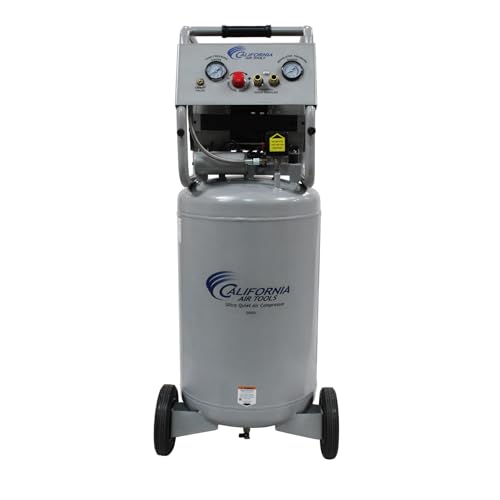
For a home garage, the California Air Tools 20020 is our first choice: 5.30 CFM at 90 PSI, a 20-gallon tank, 70 dB and no oil changes, per the maker. The Makita MAC5200 offers the most airflow, and the California Air Tools 8010 is the quiet, light option.
An air compressor is a small power plant for tools that run on compressed air: nailers and staplers, impact wrenches, ratchets, blow guns, sanders, spray guns and tire inflators. The right one depends on how much air your tools use, how often you use them and how much noise, weight and maintenance you can live with. This ranking covers seven corded 120V compressors, from a 20-gallon garage machine to a 1-gallon quiet unit, and explains why each sits where it does. Cordless and 12V tire inflators are a different product, so they have their own ranking at best portable tire inflators for 2026.
How We Chose
We compared what each maker publishes on its own product page and took no specs from retail listings. Here are the criteria we weighed.
CFM at 90 PSI. This number tells you which tools a compressor can run. Most air tools list their air consumption at 90 PSI. Choose a compressor whose CFM at 90 PSI exceeds the tool’s figure, with some margin. Tools that use air in short bursts, such as nailers and impact wrenches, need less than tools that use it continuously, such as sanders, grinders and spray guns.
Tank size and pump. A bigger tank stores more air and lets the motor rest between bursts. A pancake tank is easy to carry but stores little. The pump type matters too: oil-free pumps need no oil changes, and oil-lubricated cast-iron pumps, like Makita’s Big Bore design, are built to be serviced.
Noise. We use the maker’s decibel figure where one exists and say so where it does not. Makers measure differently, so we treat these as rough guides, not a contest.
Weight and portability. A 115-lb machine on wheels and a 29-lb carry-around suit different jobs.
Electrical load. A 120V compressor’s amp draw decides whether it fits your circuit. We note the maker’s figure when one is published.
Order of the ranking. We rank by the combination of airflow, tank capacity and features for a typical home garage or small shop, with the larger and better-equipped models first and the smallest, lightest model last. Where a maker does not publish a number, we say so rather than fill it in.
Summary Table
#
Model
Tank
CFM at 90 PSI
Max PSI
Noise
Pump
Weight
1
California Air Tools 20020
20 gal
5.30
125
70 dB
Oil-free dual piston
About 115 lbs
2
Makita MAC5200
5.2 gal
6.5
140
Not listed
Oil-lubricated, cast iron
88 lbs
3
Makita MAC2400
4.2 gal
4.2
130
79 dB
Oil-lubricated, cast iron
77 lbs
4
Metabo HPT EC711S
6 gal
2.8
165
73 dB
Oil-free, belt-driven
38.5 lbs
5
California Air Tools 8010
8 gal
2.20
120
60 dB
Oil-free dual piston
48 lbs
6
CRAFTSMAN CMEC6150K
6 gal
2.6 SCFM
150
78.5 dBA
Oil-free
33.8 lbs
7
California Air Tools 1P1060S
1 gal
1.20
120
56 dB
Oil-free, single piston
29 lbs
1. California Air Tools 20020 — The Quiet 20-Gallon Garage Workhorse
The 20020 tops our list because it combines a large tank, strong airflow and a low noise rating in one machine with no oil to change. California Air Tools lists a 2.0 HP motor at 1,680 RPM, 6.40 CFM at 40 PSI, 125 PSI maximum, a 4-minute fill and a 1-minute recovery from 90 to 120 PSI. The maker describes the tank as designed for higher-demand tools such as spray guns and sanders, and adds an Easy Start Valve to reduce starting amps.
The trade-offs are weight and electrical load. At about 115 lbs it stays wherever you roll it, and the maker lists up to 14 amps and recommends a dedicated 15 amp outlet. Read the California Air Tools 20020 profile for the full specs.
2. Makita MAC5200 — The Airflow Leader for Two Nailers
The MAC5200 has the highest airflow here, from a 3.0 HP (2.1 HP running) motor, a 5.2-gallon tank and a 140 PSI maximum. Makita includes a roll cage, wheels, a folding handle, a hose wrap for 50 feet of 3/8-inch hose and an oil sight glass. Two quick couplers and a bottle of oil come in the box.
It ranks second, not first, because the pump is oil-lubricated, Makita’s page gives no decibel or amp figure, and the tank is small for long spray jobs. See the Makita MAC5200 profile.
3. Makita MAC2400 — A Lighter Big Bore With a Published Noise Figure
The MAC2400 shares the cast-iron, oil-lubricated Big Bore design, with a twin-stack 4.2-gallon tank, a 130 PSI maximum and a roll-bar handle. Makita says it delivers enough air for two nailers and that its low amp draw reduces tripped breakers, though it gives no amp figure. At 77 lbs it is carried, not rolled, and the oil routine applies. See the Makita MAC2400 profile.
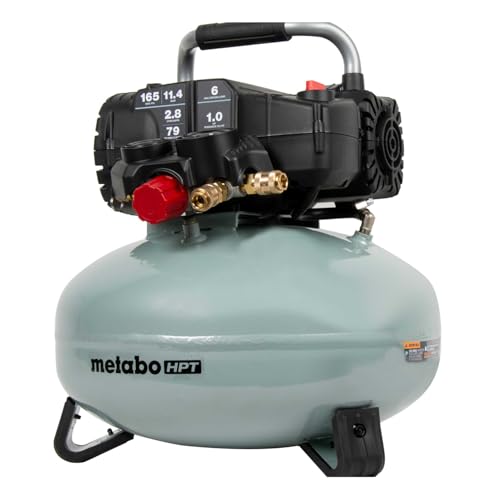
The EC711S is the pancake to pick when you want light weight and solid airflow for its class. Metabo HPT lists a belt-driven, oil-free design, 3.7 CFM at 40 PSI, a 46-second tank recovery and two 1/4-inch universal quick couplers, and says it can run nail guns from a 23-gauge pin nailer to a 15-gauge finish nailer. Metabo HPT lists 12 amps. A pancake tank is small, which limits it for continuous tools. See the Metabo HPT EC711S profile.
5. California Air Tools 8010 — The Quiet, Light, Low-Amp Option
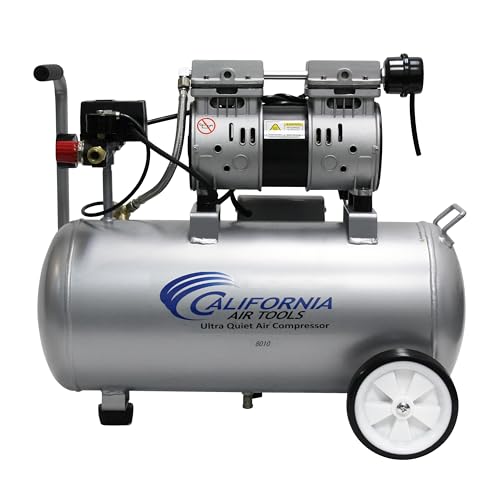
The 8010 suits anyone working in an attached garage or indoors. The maker lists 1.0 HP, 3.10 CFM at 40 PSI, 120 PSI maximum, a 165-second fill and UL/CSA certification. Its 2.20 CFM at 90 PSI keeps it to nailers, inflation, airbrushing and short bursts of air tools. See the California Air Tools 8010 profile.
6. CRAFTSMAN CMEC6150K — A Pancake Kit for Tires and Trim
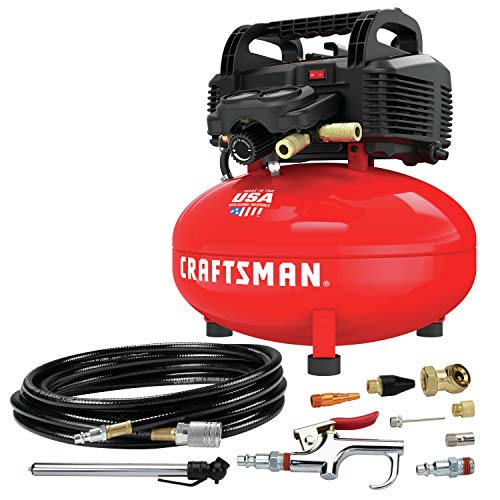
CRAFTSMAN lists 150 PSI maximum, 2.6 SCFM at 90 PSI, 33.8 lbs and a double coupler for two users, and says the unit is made in Jackson, Tennessee with global materials. The kit makes it a good starter for tire inflation and trim nailing. The trade-off is noise: CRAFTSMAN lists 78.5 dBA, the highest in this lineup, and the airflow is modest. See the CRAFTSMAN CMEC6150K profile.
7. California Air Tools 1P1060S — The Smallest and Quietest
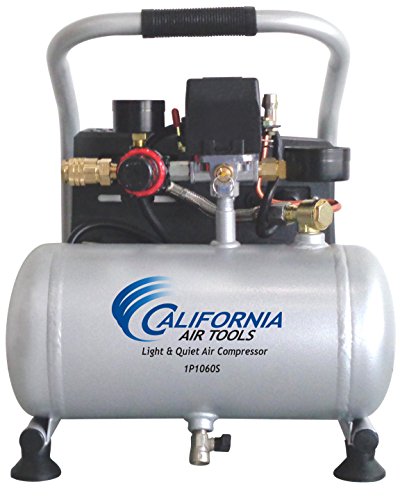
The 1P1060S lists 0.6 HP rated, 1.20 CFM at 90 PSI, 1.60 CFM at 40 PSI, 120 PSI maximum, 4.5 amps and a 50-second fill. The maker says it handles staple guns, brad and finish nailers, airbrushes and blow guns, and calls it great for cleaning and inflating tires, beds, toys and sport balls. It ranks last because its tank and airflow are the smallest. See the California Air Tools 1P1060S profile.
How to Match a Compressor to Your Tools
Start with the tools, not the compressor. Write down each tool you plan to run and find the air consumption and operating pressure in its manual or on its maker’s page. Operating pressure tells you whether the compressor’s maximum is high enough. For example, the Metabo HPT NT50AE2 brad nailer lists 70 to 120 PSI, which every compressor in this ranking can supply. Air consumption tells you whether the pump can keep up. Compare the tool’s CFM at 90 PSI with the compressor’s, and leave a margin so the pump is not running flat out.
Next, think about duty. Nailers, staplers, impact wrenches and inflators use air in short bursts, so a small tank and a modest pump work well, and the compressor spends most of the time idle. Sanders, grinders, polishers and spray guns pull air for long stretches. For those, you want the biggest tank and the highest CFM you can fit, and you should expect even a large compressor to run frequently.
Then consider where it will live. In an attached garage, a lower decibel rating and a lower amp draw make life easier. On a job site or in a truck, weight and a roll cage matter more. If you want no oil routine, choose from the oil-free models. If you want a cast-iron pump that you can service and that Makita says runs cooler, choose an oil-lubricated Makita.
Finally, plan for extras. A compressor needs a hose rated above your working pressure, fittings that match its quick couplers and a regulator setting for each tool. Only the CRAFTSMAN kit on this list includes a hose and accessories, so budget separately for those with the others.
Which One to Choose
For a home garage with a mix of tools: the California Air Tools 20020, for tank size, airflow and lower noise.
For running two nailers or heavier tools: the Makita MAC5200 for airflow, or the MAC2400 if you want less weight.
For carrying to a job: the Metabo HPT EC711S at 38.5 lbs, or the CRAFTSMAN CMEC6150K at 33.8 lbs if you want a kit.
For quiet, shared spaces: the California Air Tools 8010 at 60 dB, or the 1P1060S at 56 dB for small jobs.
For a smaller budget: the 1P1060S and the CRAFTSMAN kit are the smallest machines here, while the 20020 and the Makita models are bigger investments. The $ badge on each page shows the relative price range, and the See price on Amazon button leads to the current price.
Wear eye protection with any compressed air tool and drain the tank after use. OSHA’s 29 CFR 1910.242(b) says compressed air must not be used for cleaning except where reduced to less than 30 psi and then only with effective chip guarding and personal protective equipment. It is an employer rule, but a good guide at home. Have a licensed electrician handle any wiring change.
Conclusion
The California Air Tools 20020 is our first choice for a typical home garage, with the Makita MAC5200 for airflow, the Makita MAC2400 for a lighter Big Bore, the Metabo HPT EC711S for the best pancake, the California Air Tools 8010 for quiet, the CRAFTSMAN CMEC6150K as a kit and the 1P1060S for small jobs. Check each tool’s CFM at 90 PSI before buying, and match the compressor to the circuit.
What is the best air compressor for a home garage?
Among these seven, we rank the California Air Tools 20020 first for a home garage: 5.30 CFM at 90 PSI, a 20-gallon tank, 70 dB and an oil-free pump, according to the maker. If you run two nailers or heavier tools, the Makita MAC5200 lists 6.5 CFM at 90 PSI. If noise matters more than airflow, the California Air Tools 8010 lists 60 dB.
What does CFM at 90 PSI mean and why does it matter?
CFM is cubic feet of air per minute. Most air tools list how much air they consume at 90 PSI, so a compressor's CFM at 90 PSI should meet or exceed the tool's figure, with a margin. A compressor that cannot keep up will run constantly and the tool will lose power.
Do I need an oil-free or an oil-lubricated compressor?
Oil-free models, such as the California Air Tools 20020 and 8010 and the Metabo HPT EC711S, have no oil to change. Oil-lubricated models, such as the Makita MAC5200 and MAC2400, use a cast-iron pump that Makita says runs cooler and is serviceable, in exchange for oil checks. Choose based on how much maintenance you are willing to do.
Can I plug a compressor into any garage outlet?
Not always. California Air Tools lists up to 14 amps for the 20020 and recommends a dedicated 15 amp outlet, and lists 8.5 amps for the 8010. Check the nameplate on any model, avoid sharing the circuit with other big loads, keep cords short and heavy-gauge, and ask a licensed electrician about wiring.
Is it safe to clean with compressed air?
Be careful. OSHA's 29 CFR 1910.242(b) says compressed air must not be used for cleaning except where reduced to less than 30 psi and then only with effective chip guarding and personal protective equipment. That is an employer rule, but it is a sensible guide at home. Wear eye protection and never point air at skin.
Where are the tire inflators?
12V and cordless tire inflators are a different type of product and have their own ranking, our best portable tire inflators for 2026.