We earn a commission if you buy through our links, at no extra cost to you.
Air Compressor for a Home Garage: How to Choose
How to pick an air compressor for a home garage: CFM at 90 PSI, tank size, 120V amps, noise in an attached garage, oil vs oil-free, draining and hoses.
At a glance
For a home garage, size the compressor by the CFM at 90 PSI your tools need, then check the 120V circuit and noise. The California Air Tools 20020 suits mixed tools at 5.30 CFM and 70 dB. The Makita MAC5200 adds airflow, and the California Air Tools 8010 is the quiet option.
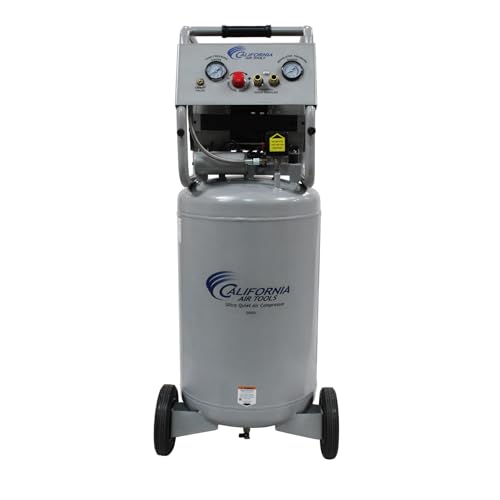

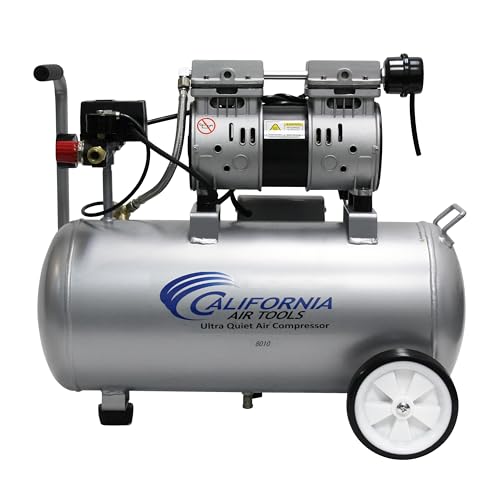
A garage compressor is only as useful as the match between its air supply and the tools you attach. Buy too small and the pump runs constantly while your tool sputters. Buy too big and you may overload the garage circuit, put up with noise through the wall and haul around 115 lbs for nothing. This guide shows how to size a compressor for a home garage using CFM at 90 PSI and tank volume, then covers the practical points that decide whether it fits: the 120V circuit, noise in an attached garage, oil versus oil-free pumps, draining the tank and the hose.
Specs come from the makers’ own pages, and safety references come from OSHA, as listed under Sources.
Start With CFM at 90 PSI
Air tools list how much air they consume, usually as CFM at 90 PSI. A compressor lists how much it delivers at the same pressure. The rule is simple: the compressor’s CFM at 90 PSI should exceed the tool’s, with a margin.
- Burst tools: nailers, staplers, impact wrenches, ratchets and inflators use air in short pulses, so they are forgiving. A compressor with a modest CFM can run them, with pauses while the tank refills.
- Continuous tools: sanders, grinders, polishers and spray guns pull air steadily. They need a compressor with much more CFM and a large tank, and even then the pump will run often.
Among the models we rank, the maker-listed figures at 90 PSI run from 1.20 CFM for the California Air Tools 1P1060S to 6.5 CFM for the Makita MAC5200. In between are the 2.20 CFM of the California Air Tools 8010, the 2.8 CFM of the Metabo HPT EC711S, the 4.2 CFM of the Makita MAC2400 and the 5.30 CFM of the California Air Tools 20020. See the full table in our air compressor ranking for 2026.
Tank Size Is Your Buffer
CFM is how fast the pump makes air. The tank is how much it stores. A bigger tank lets you run a burst of air without the motor starting, and it lets the pump rest between demands. A 6-gallon pancake tank is easy to carry and store, but it can empty quickly under a continuous tool. A 20-gallon tank holds a lot more, and the California Air Tools 20020 page describes its tank as built to store air for higher-demand tools such as spray guns and sanders. The trade-off for a bigger tank is weight and floor space.
The 120V Circuit
Most home garage compressors plug into a standard 120V outlet, and the current they draw is the part people forget. California Air Tools lists up to 14 amps for the 20020 and recommends a dedicated 15 amp outlet with a 14-gauge, 25-foot cord, and it lists 8.5 amps for the 8010. Metabo HPT lists 12 amps for the EC711S. Makita does not list amps for the MAC5200 or MAC2400, though it says the MAC2400’s low amp draw reduces tripped breakers.
Practical rules:
- Read the nameplate on the machine you buy and compare it with the breaker on the circuit you will use.
- Keep other big loads, such as a space heater, freezer or second tool, off that circuit.
- Use a short, heavy-gauge extension cord, if you need one at all. A thin or long cord causes voltage drop when the motor starts.
- If a breaker trips repeatedly, ask a licensed electrician rather than swapping the breaker yourself.
Noise in an Attached Garage
A compressor in an attached garage can be a noise source for the rooms next to it. Makers publish decibel figures and measure them their own way, so treat them as rough guides. California Air Tools lists 60 dB for the 8010 and 56 dB for the 1P1060S, and 70 dB for the 20020. Metabo HPT lists 73 dB for the EC711S, Makita lists 79 dB on the MAC2400’s feature line and no figure for the MAC5200, and CRAFTSMAN lists 78.5 dBA for the CMEC6150K. California Air Tools credits the low motor speed (1,680 RPM) for less noise and describes the 8010 as ideal for working indoors where noise is a major issue.
Place the compressor away from shared walls, fill the tank before quiet hours and consider a longer hose so the machine can sit farther from where you work.
Oil-Free or Oil-Lubricated
Oil-free pumps, like those in the California Air Tools, Metabo HPT and CRAFTSMAN models, have no oil to check or change, so they need less upkeep. Oil-lubricated pumps, like Makita’s cast-iron Big Bore design, are built to be serviced and, according to Makita, run cooler. They come with an oil sight glass and drain, and a bottle of oil in the box. If you will not check oil, pick an oil-free model. If you want a serviceable pump and the highest airflow, a Makita is worth the routine upkeep.
Our Picks for a Home Garage
California Air Tools 20020: The All-Rounder
For a home garage with mixed tools: 5.30 CFM at 90 PSI, a 20-gallon tank and 70 dB, with no oil to change.
It has the largest tank here and a good balance of airflow and noise, with an Easy Start Valve to reduce starting amps. Plan for about 115 lbs and a dedicated outlet. Read the California Air Tools 20020 profile.
Makita MAC5200: The Airflow Pick
For heavier air tools or two nailers: 6.5 CFM at 90 PSI from a cast-iron Big Bore pump, with wheels and a folding handle.
California Air Tools 8010: The Quiet, Light Pick
For an attached garage where noise and amps matter: 60 dB, 8.5 amps and 48 lbs with an 8-gallon oil-free tank.
Draining the Tank and Choosing a Hose
Moisture collects inside any air tank. Drain it after use, with the pressure released as the manual directs, and the Makita MAC5200 and MAC2400 pages list a lever-handle ball valve designed to make that easier. California Air Tools sells a water and oil separator filter and an automatic drain valve as add-ons, and it asks you to replace the intake air filter every two years, or every year in a dusty garage.
For the hose, use one rated above your working pressure, with fittings that match the compressor’s quick couplers. The Makita MAC5200 page describes a hose wrap for 50 feet of 3/8-inch hose, and the CRAFTSMAN CMEC6150K kit includes a 25-foot hose. California Air Tools sells a 25-foot hybrid hose and a 16-piece hose and accessory kit separately. A long hose lets you put a noisy compressor farther away, but a thin one can cut airflow at the tool.
Cleaning With Compressed Air
OSHA’s 29 CFR 1910.242(b) says compressed air must not be used for cleaning except where reduced to less than 30 psi and then only with effective chip guarding and personal protective equipment. OSHA’s interpretation measures the 30 psi at the nozzle opening. This is an employer rule for workplaces, not a rule for home users, but it is a useful guide when you blow dust off a workbench. Wear eye protection and never point air at skin.
Sources
- California Air Tools 20020 official product page
- California Air Tools 8010 official product page
- Makita MAC5200 official product page
- Makita MAC2400 official product page
- Metabo HPT EC711S official product page
- CRAFTSMAN CMEC6150K official product page
- California Air Tools 1P1060S official product page
- OSHA 29 CFR 1910.242, hand and portable powered tools (eCFR)
- OSHA standard interpretation STD 01-13-001
Frequently asked questions
What size air compressor do I need for a home garage?
Start from your tools. Find each tool's air consumption in CFM at 90 PSI and choose a compressor that exceeds it with a margin. For nailers, inflators and impact wrenches used in bursts, a compressor with a few CFM at 90 PSI is typical. For sanders, grinders and spray guns, you want the largest tank and highest CFM you can fit.
How many gallons does the tank need to be?
Tank size sets how long you can use air before the pump restarts, while CFM sets how much air the pump makes. A 20-gallon tank, like the California Air Tools 20020, stores much more than an 8-gallon or 6-gallon tank. For short bursts a small tank is fine. For longer jobs, bigger is more comfortable.
Will a compressor trip my garage breaker?
It can if the circuit is shared. California Air Tools lists up to 14 amps for the 20020 and recommends a dedicated 15 amp outlet, and lists 8.5 amps for the 8010. Check the nameplate, keep other large loads off the circuit and use a short, heavy-gauge cord. Ask a licensed electrician before changing any wiring.
How loud is a garage air compressor?
It varies by model. The makers list 60 dB for the California Air Tools 8010 and 70 dB for the 20020, while CRAFTSMAN lists 78.5 dBA for its pancake kit and Makita lists no figure for the MAC5200. Different makers measure differently, so use the numbers as rough guides.
Do I need to drain the tank?
Yes. Moisture collects in the tank as air is compressed. Drain it after use, with the pressure released as the manual directs. Makita lists a lever-handle ball valve on its tank to make this easier.
Can I use compressed air to clean my garage or workbench?
OSHA's 29 CFR 1910.242(b) says compressed air must not be used for cleaning except where reduced to less than 30 psi and then only with effective chip guarding and personal protective equipment. That is an employer rule for workplaces, but it is a sensible reference at home. Wear eye protection and never point a blow gun at skin.